
Smarter Commercialization for Life Science Startups
Life science founders often start with the same assumption: if the technology is medical, the path forward must begin with the FDA.
That can mean years of development, clinical studies, regulatory work, and fundraising before the company ever reaches a customer.
At MedStart’s Smart First Markets: Life Science & Medical Startups event, Dr. Jordan Plews challenged founders to think differently.
“The FDA drug path is usually the North Star,” he told the group, “but you could argue it’s rarely the right place to start.”
That doesn’t mean avoiding regulation or taking shortcuts with safety. It means looking carefully at the technology and asking a different question:
Is there a smarter first market that helps us build toward the bigger opportunity?
For some technologies, the answer could be cosmetics. For others, veterinary medicine, wellness, research applications, medical devices, or another adjacent market may provide a faster way to generate data, build a customer base, attract investment, or simply keep the company alive long enough to reach the larger medical opportunity.
The Problem With Starting at the Finish Line
Dr. Plews understands this problem from experience.
His career has moved between academic research and commercialization, including biochemical engineering, stem cell research, work at Pfizer, postdoctoral research at Stanford, product management, regenerative medicine, medical aesthetics, biotechnology startups, and scientific consulting.
Early in his career, he was interested in translating stem cell research into therapies. But the economics were daunting.
Developing a new therapeutic could require tens of millions of dollars and many years before reaching the market. Meanwhile, investors were asking a much more immediate question: what could be accomplished with less money and in a shorter period?
That pushed him to explore adjacent opportunities, including aesthetics.
The experience led to a lesson that became one of the main themes of his MedStart presentation:
Understand where you ultimately want to go, but don’t automatically assume you need to start there.
Think of Commercialization as a Sequence
Most founders think about commercialization as a destination.
Dr. Plews encouraged founders to think about it more like a sequence.
Imagine your ultimate goal is developing a therapeutic product. There may be several ways to get there.
One path might look like:
Research → Preclinical Development → Clinical Trials → FDA Approval → Market
But another could look more like:
Adjacent Market → Revenue and Data → Additional IP → Funding → Medical Application
The second path isn't automatically better. In some situations, it could actually hurt the company.
The important question is whether the first market creates something valuable for the next one.
Dr. Plews described it this way:
Does the output of the first market become an input into the next market?
For example, an adjacent-market product might help a company develop manufacturing capabilities, collect useful data, establish intellectual property, validate customer demand, improve the technology, or demonstrate that the underlying mechanism works.
If those assets support the larger medical opportunity, the first market may be strategically valuable.
If they don't, it may simply be a distraction.
And startups have no shortage of attractive distractions.
Just Because You Can Make Money Doesn't Mean You Should
This may have been one of the most useful lessons of the evening.
Scientists and entrepreneurs inevitably discover additional applications for their technology.
Someone develops a biotechnology platform and realizes they could also sell a research reagent. A medical device company discovers there may be a consumer wellness application. A regenerative medicine technology could potentially be used in aesthetics.
The temptation is obvious.
There are customers. There is revenue. Why wouldn't you pursue it?
Because every new market requires resources.
Marketing. Sales. Distribution. Manufacturing. Regulatory work. Customer support. Management attention.
A small startup can quickly find itself running three businesses instead of building one.
As Plews pointed out, just because an opportunity makes money doesn't necessarily mean you should pursue it.
The better question is whether pursuing that opportunity improves the probability of reaching the larger goal.
The Four-Question Filter
Toward the end of the discussion, Plews distilled much of the conversation into a simple framework founders can use when evaluating commercialization pathways.
Before committing to a market, answer four questions.
1. What is the mechanism?
Start with the science.
What does the technology actually do?
Understanding the mechanism helps identify where else the technology might create value and where the regulatory boundaries may be different.
A founder may initially think of a technology strictly as a therapeutic, for example, when the underlying mechanism could potentially have applications in diagnostics, veterinary medicine, cosmetics, research, wellness, or medical devices.
The science stays the same.
The commercial application can change dramatically.
2. What is the smallest study that proves something useful?
Scientists naturally want comprehensive evidence.
Startups rarely have comprehensive budgets.
Plews suggested finding the smallest experiment capable of answering an important business or scientific question.
Instead of immediately designing the perfect study, ask:
What is the least expensive experiment that meaningfully reduces uncertainty?
That could mean a small proof-of-concept study, customer discovery, an animal application, a limited pilot, or another focused experiment.
The goal isn't to prove everything.
It's to learn enough to make the next decision.
3. What channel could actually commercialize it?
A technology is not a business until someone can buy it.
Who is the customer?
How does the product reach them?
Who makes the purchasing decision?
What claims can you legally make?
What regulatory pathway applies?
Who handles sales and distribution?
These questions can completely change the attractiveness of an opportunity.
A market may look attractive scientifically but require a sales organization the startup cannot afford to build. Another opportunity may have slightly less theoretical upside but provide a clear path to customers.
Understanding the channel matters as much as understanding the technology.
4. Does the first market create an asset for the second?
This is the question that ties everything together.
Your first market should ideally leave you with something valuable that survives when you move into the next one.
That might include:
Clinical or preclinical data
Manufacturing experience
Intellectual property
Regulatory knowledge
Revenue
Customer relationships
Brand credibility
Distribution
Technical validation
A stronger fundraising story
If your first market creates none of those things for your long-term strategy, reconsider whether it deserves your limited time and capital.
Plews put the challenge plainly: if you cannot answer these questions in writing, your commercialization strategy probably isn't ready yet.
Different Markets May Also Mean Different Investors
Another complication is fundraising.
Founders sometimes assume investors will fund the underlying technology and happily follow wherever the technology eventually goes.
That isn't usually how venture capital works.
Investment firms have specific theses.
A fund investing in medical devices may not want a cosmetics company. An investor excited about consumer aesthetics may have little interest in financing years of drug development.
Plews said that, in his experience, the investors interested in the first market and the investors interested in the eventual pharmaceutical opportunity are often not the same people.
That means founders should think about capital strategy alongside market strategy.
In some circumstances, different applications may even make more sense as separate companies or entities rather than forcing multiple markets into the same business.
The important thing is to anticipate that issue rather than discovering it after investors are already on the cap table.
Protect Your IP Early
Commercialization strategy can change.
Your intellectual property strategy shouldn't be an afterthought.
Plews encouraged founders to think about IP early, even while experimenting with different market opportunities.
A founder may begin with foundational intellectual property and then develop additional patents as the technology improves or new applications emerge.
That can become particularly important when the commercialization journey takes years.
At the same time, founders shouldn't spend years perfecting something nobody wants.
Plews' recommendation was essentially to protect the idea while testing the business assumptions as cheaply as possible.
File the IP when appropriate.
Then run the smallest experiment that gives you useful information.
The Funding Market Matters Too
A technically excellent company can still struggle if it is fundraising into the wrong market at the wrong time.
Plews compared fundraising to surfing.
You have to pay attention to the wave.
There have been periods when investors were eager to fund early biotechnology companies, followed by periods when those same investors became significantly more risk-averse.
Today, many biotech investors want companies much further along before they are willing to write a check.
That creates a difficult situation for founders: you may need investment to reach the milestones investors now expect before investing.
Adjacent markets, grants, strategic partnerships, licensing opportunities, and other funding approaches can sometimes help bridge that gap.
And occasionally the practical decision is to position the company toward the market where capital is actually available.
That may not be the founder's favorite answer.
But without capital, the company doesn't get to pursue any market.
Start With the Cheapest Useful Test
Perhaps the most actionable lesson from the evening was also the simplest.
Before raising millions of dollars, building a manufacturing operation, designing a major clinical study, or hiring a large team, identify the cheapest thing you can do that would tell you something important.
Run the micro-experiment.
Talk to the customer.
Test the channel.
Validate the mechanism.
Understand the regulatory classification.
Figure out who would actually pay.
Then make the next investment.
For scientists, this can feel uncomfortable. Healthcare requires rigor for good reason. Nobody wants a half-developed medical product reaching patients.
But rigor and startup experimentation are not opposites.
The trick is separating the scientific standard required for the final medical product from the small experiment required to decide what the company should do next.
Those are very different things.
Final Thoughts
Life science founders often fall in love with the biggest possible version of their technology.
That ambition isn't the problem.
The mistake is assuming you must build the biggest version first.
A more practical commercialization strategy may be to work backward from the ultimate goal.
Ask:
Where do we eventually want this technology to go?
What smaller market could we realistically enter first?
What can we learn there?
What assets will we build?
Will those assets make the next step easier?
Your first market doesn't need to be your final market.
But it should help you get there.
That was the central lesson from Dr. Jordan Plews' discussion with the MedStart community: choose the first step based not only on how quickly you can reach a market, but on whether that market moves the company closer to the opportunity you ultimately want to build.
For medical and life science founders trying to move an innovation from the lab into the real world, that small change in thinking can dramatically change the commercialization strategy.
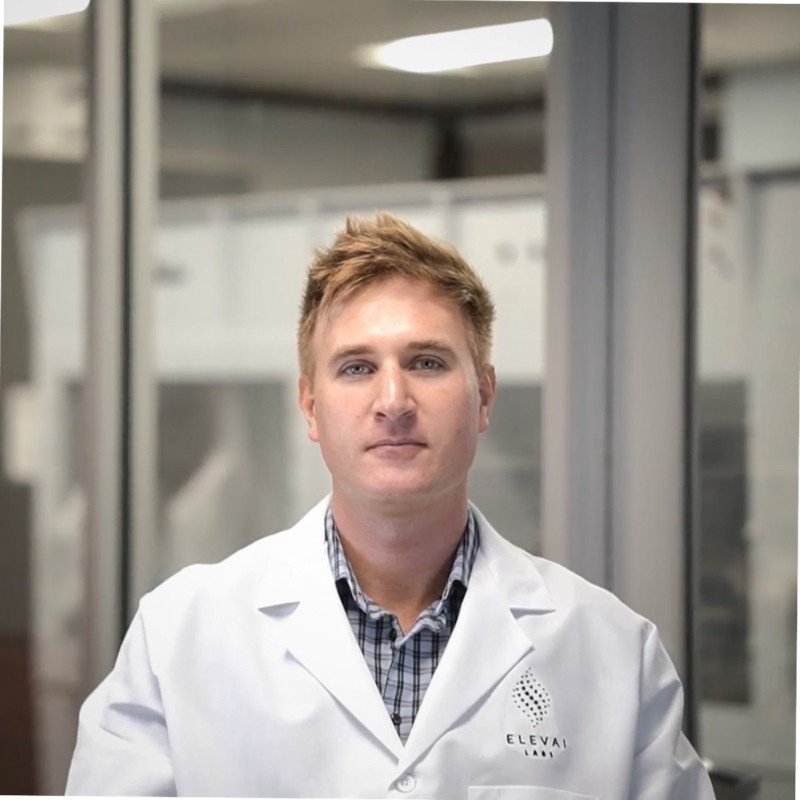
About Dr. Jordan Plews
CEO/CSO, entrepreneur, and scientist with over 20 years of experience bridging academic excellence and industry innovation. Specializing in regenerative medicine, biotechnology, and healthcare, he has successfully founded and scaled companies, built and led diverse, high-performing teams, and invented and launched groundbreaking products and technologies.
Academic foundation includes rigorous research at internationally recognized institutions such as Stanford University, University College London, and the University of Sheffield, supported by a deep technical background in Stem Cell Research, Biochemical Engineering, and Bioprocess Development. Transitioning seamlessly between academia and industry, he has leveraged his expertise to drive product innovation and commercialization at global healthcare leaders like Pfizer, along with founding multiple biotechnology and medical aesthetics startups.
His strengths include identifying market opportunities, developing advanced bio-scientific solutions, and effectively bringing new technologies from lab bench to market. Jordan is passionate about building dynamic teams, mentoring scientific and business talent, and creating collaborative cultures focused on results and innovation. His technical competencies include single-cell genomics and proteomics, RNA sequencing, advanced stem cell processing techniques, and comprehensive experience with regulatory processes and intellectual property management.
Through a combination of entrepreneurial vision, scientific rigor, and strategic business acumen, Jordan consistently aims to create impactful technologies that enhance human health and transform the future of medicine.
