
How Biotech Startups Actually Raise Capital: Lessons From Infinant Health CFO Patrick Cormier
At one point, Infinant Health was about two payrolls away from running out of cash.
The company had already raised significant venture capital, survived leadership changes, built a promising infant microbiome business and developed relationships with hospitals. Then an FDA warning letter forced the company to shut down an important part of its business almost overnight.
Investors who had been considering the next round pulled back.
The company went from roughly 50 employees to about 10.
A few years later, Infinant Health was back raising significant capital to advance a drug candidate aimed at preventing necrotizing enterocolitis in premature infants.
That journey formed the backdrop for our latest MedStart CEO Roundtable featuring Patrick Cormier, CPA, CFO of Infinant Health and founder of Cormier Strategic Finance.
Patrick didn't show up with a PowerPoint presentation. Instead, he walked a small group of medical and life science founders through what raising capital actually looks like from inside a company: the good rounds, the painful rounds, due diligence, data rooms, investor introductions, bridge financing, regulatory setbacks and the occasional moment when you're wondering whether the company will make the next payroll.
Here are some of the lessons that stood out.
1. Warm Introductions Beat Cold Outreach
Patrick was pretty direct about this one.
“Warm intros are 10 times better than cold, or 100 times better, almost.”
Infinant Health experimented with cold outreach to investors. It occasionally produced a conversation, but very little of the company's serious fundraising momentum came that way.
Most meaningful investor conversations came through relationships.
A board member knew someone. An existing investor made an introduction. That investor wasn't interested but knew another investor who might be. One conversation led to another.
That chain of introductions eventually helped connect Infinant Health with investors who became interested in financing the company's next stage.
This is an important lesson for medical founders.
Fundraising isn't simply about creating a list of 500 venture capital firms and sending them the same email.
Start with your network.
Look at:
Existing investors
Board members
Advisors
Physicians and researchers
Industry executives
Attorneys and accountants
Other founders
Strategic partners
University contacts
Investors who already passed but liked you or the technology
Then ask a very specific question:
“Who do you know who might be interested in this?”
Patrick described using LinkedIn this way. Instead of treating it primarily as a platform for posting content, he uses it as a research tool.
Find the investor you want to meet.
Then figure out who you know who knows that person.
It's a much different strategy from sending another cold LinkedIn message into the abyss.
2. Research Investors Before You Chase Them
One of Patrick's current roles involves helping other startups prepare for fundraising.
His process begins with understanding who actually invests in the space.
He uses tools such as PitchBook to research:
Companies an investor has previously backed
Industries they focus on
Check sizes
Financing stages
Similar technologies they've funded
Recent investments
He also uses AI tools as a starting point for investor research.
The goal isn't simply to produce a giant investor spreadsheet.
It's to identify investors who have a reason to care about the company.
There is another wrinkle founders sometimes miss: an investor's past experience with your sector can work both ways.
Patrick pointed to the microbiome industry as an example. A lot of microbiome companies attracted investment several years ago. Some subsequently failed.
That meant an investor who looked perfect on paper because they had previously invested in microbiome companies might actually be less interested because they had already been burned by the category.
Investor research isn't just:
“Have they invested in something like us?”
It is also:
“What happened when they did?”
3. Your Data Room Is Part of Your Pitch
One of the most practical lessons from the discussion involved something that rarely appears in startup pitch competitions: the data room.
Patrick emphasized having the data room prepared before serious investor conversations begin.
For Infinant Health, that included information such as:
Corporate formation documents
Previous financing rounds
Scientific publications
Financial information
Contracts
Intellectual property information
Clinical and regulatory materials
Supporting diligence documents
When an investor finished a meeting and asked for access, Patrick's team tried to provide it immediately.
Why?
Investor attention has a half-life.
A meeting might go extremely well on Thursday. If the company takes two weeks to organize documents and respond, the investor may already be looking at three other opportunities.
Patrick explained that they learned to move quickly.
The data room also became a useful signal.
Using Carta, the team could see whether investors were actually opening and downloading documents.
An investor might tell you:
“This looks really interesting. Send me access to the data room.”
That sounds promising.
But if they never open anything, they're probably not very interested.
If they download several documents, return three days later and download more, that's a different signal entirely.
For founders, the lesson is simple:
Don't wait until an investor requests due diligence to start preparing for due diligence.
4. Fundraising Is a Team Sport, but the CEO Usually Has to Sell
Patrick described his role in fundraising as being the CEO's “right-hand man.”
The CEO was primarily responsible for relationships, introductions and investor conversations.
Patrick ran much of the machinery behind them.
He maintained a spreadsheet tracking:
Every investor contacted
Conversations that occurred
What was discussed
Current status
Follow-up items
Next steps
He managed the data room.
He coordinated diligence requests.
He helped answer financial questions.
And when investors sent 20, 50 or even 100 due diligence questions, he organized the process of getting those questions answered.
This division of labor makes a lot of sense.
Especially in life sciences, investors are investing in more than the technology.
They are evaluating the leadership team that will spend their money.
The CEO needs to be able to articulate the vision and build confidence.
But somebody also needs to make sure the spreadsheet balances, the diligence question gets answered and the document promised yesterday actually gets sent.
Fundraising needs both.
5. Investors Pay Close Attention to the Team
One thing Patrick heard repeatedly during Infinant Health's fundraising process was that investors liked the management team.
That wasn't because everyone had perfect résumés.
It was because the people around the table knew their subjects.
Patrick described investor diligence sessions where difficult scientific questions came up and members of the scientific team could answer them immediately.
No hand waving.
No “we'll get back to you next week.”
They knew the science.
Patrick's job was similar on the financial side.
His description was pretty straightforward:
“I just made sure my numbers weren't wrong.”
That sentence is funny because it sounds ridiculously simple.
But investors notice.
Founders sometimes obsess over getting another 10 slides into the deck when the stronger investment may be preparing the team to answer difficult questions.
A sophisticated investor is eventually going to get beyond your pitch deck.
They are going to test whether your organization actually understands what it is building.
6. The Story in Your Financial Model Needs to Be Credible
Patrick has seen financial projections from several sides: as an auditor, controller, CFO and investor-facing finance executive.
And he has seen some very aggressive hockey sticks.
During one financing cycle, Infinant Health was producing only a few million dollars in revenue but received a term sheet based partly on expectations of very rapid future growth.
The market environment helped. Capital was flowing aggressively into venture-backed companies during that period.
But the projections proved far more optimistic than reality.
There is an important lesson here for founders.
Investors expect forecasts to be wrong.
Nobody truly knows what revenue will be five years from now.
But there is a difference between a forecast built on reasonable assumptions and one built primarily to produce the valuation you want.
A financial model should help explain:
What assumptions drive the business
What milestones the company expects to achieve
How much those milestones cost
How long the money lasts
What happens if development takes longer
What happens if revenue comes later
When the company will need additional capital
A model isn't valuable because Excel accurately predicts 2031.
It is valuable because it exposes the assumptions behind your strategy.
7. Raising the Round Doesn't Mean the Fundraising Is Over
One story from Patrick's experience illustrates another misconception.
Getting a lead investor and a term sheet doesn't necessarily mean you're finished.
In one financing, Infinant Health had an investor willing to commit a significant portion of the round.
But the investor essentially told the company:
Come back when you've found the rest.
The team still had to go out and fill the round.
This is where founders learn that a term sheet can feel like reaching the finish line, only to discover somebody quietly moved the finish line another mile down the road.
Patrick's advice ultimately came back to persistence.
You keep making calls.
You keep asking for introductions.
You keep updating the investor pipeline.
And you keep working until the money is actually in the bank.
8. Understand What Kind of Investor You're Bringing Onto the Cap Table
The discussion also moved beyond raising money to something equally important:
Who are you taking money from?
Patrick has worked with angel investors, strategic corporate investors, venture firms and institutional investors.
Each behaves differently.
Angel investors may write smaller checks, but that money can represent a much larger percentage of their personal wealth.
That can mean they understandably want more frequent updates and involvement.
Institutional investors may write multimillion-dollar checks routinely and operate differently.
But bigger isn't automatically better.
Patrick described one of the more difficult investor behaviors as someone who becomes very hands-on without having enough relevant expertise.
Board composition matters too.
A venture firm may be a great organization, but the individual assigned to your board is the person you're actually going to be working with.
That person can influence hiring, strategy, budgets and future financing.
The check matters.
So does the person who comes with it.
9. Life Science Financing May Come From Somewhere Other Than Venture Capital
Perhaps one of the best stories of the evening had nothing to do with traditional venture fundraising.
After the FDA disruption, Infinant Health was running extremely low on cash.
Patrick said the company was roughly two payrolls away from running out of money.
Then an opportunity emerged through a relationship with the Gates Foundation, which had previously invested in the company.
The foundation couldn't finance the company's new U.S.-focused strategy directly, but it could make connections.
That eventually led to a licensing relationship with an Indian pharmaceutical company and milestone payments that helped keep Infinant Health alive.
That story is worth remembering.
A financing strategy for a medical startup doesn't necessarily have to mean:
VC → VC → VC → VC.
Capital can potentially come from:
Venture investors
Angel investors
Strategic corporate partners
Licensing agreements
NIH grants
SBIR/STTR funding
Foundations
Sponsored research
Venture debt
Milestone payments
Partnerships
Sometimes the check that keeps your company alive comes from a place you weren't originally looking.
10. Regulatory Risk Can Rewrite the Entire Business Overnight
Medical startups have another variable that most software companies don't face.
Regulators can change the path.
Infinant Health experienced that firsthand.
The company had developed a hospital business around a probiotic used with premature infants. Hospitals were adopting the product and the business was gaining traction.
Then the FDA determined that using the product in a vulnerable preterm population required a drug regulatory pathway.
The hospital business effectively stopped.
A planned fundraising round fell apart.
The company reduced its workforce from roughly 50 people to around 10.
It could have ended there.
Instead, management eventually made a much bigger decision:
If the FDA wanted a drug, they would develop a drug.
The company began working with contract manufacturing and clinical research organizations and started building a clinical development strategy around preventing necrotizing enterocolitis in premature infants.
That required a completely different capital strategy.
And eventually it led the company back into a significant institutional financing.
For medical founders, regulatory strategy isn't a box to check after product development.
It is part of company strategy.
It affects your timeline.
Your clinical plan.
Your manufacturing.
Your burn rate.
Your investors.
And ultimately, how much money you need to raise.
The Bigger Lesson: Survive Long Enough to Find the Next Path
There was no straight line in Patrick's story.
The company raised money.
Leadership changed.
The strategy changed.
The regulatory environment changed.
Investors changed.
The company shrank.
The company rebuilt.
A licensing agreement provided cash at exactly the right moment.
And the team eventually returned to institutional investors with a new drug development strategy.
That is probably a more realistic picture of building a medical startup than the version we usually see in pitch decks.
We like entrepreneurship stories that look like this:
Idea → Funding → Growth → Exit
The real version is more often:
Idea → Funding → Problem → Pivot → Almost Run Out of Money → Unexpected Opportunity → Regulatory Problem → New Strategy → More Funding → Keep Going
It is messier.
But it is also much more useful for founders to hear.
What Medical Founders Should Take Away
If you're preparing to raise capital for a medical or life science startup, Patrick's experience suggests several practical things you can do now.
Start building investor relationships before you need money.
Ask for warm introductions instead of relying entirely on cold outreach.
Research who actually invests in your sector, stage and check size.
Prepare your data room early.
Track every investor conversation and follow-up.
Respond quickly when investors show interest.
Build financial projections you can defend.
Make sure your scientific and clinical team can handle difficult diligence questions.
Think carefully about who you allow onto your cap table and board.
And don't assume venture capital is the only form of capital available to you.
Most importantly, preserve runway.
Because sometimes the difference between a startup that fails and one that eventually raises the next round isn't that one had better science.
It is that one had enough time left to find another path.
That's the kind of lesson we created the MedStart CEO Roundtable to surface.
Not theory.
Not another pitch competition.
Real conversations with founders and executives who har
About Patrick
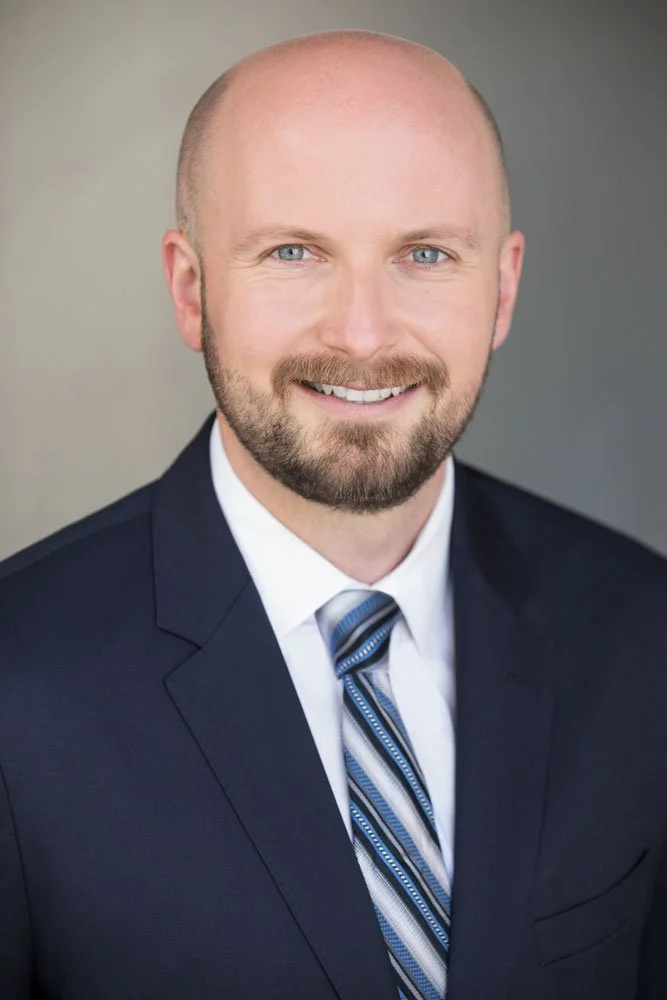
Patrick Cormier is a finance and accounting executive with over 15 years of experience spanning public accounting, corporate finance, and CFO-level leadership in the life sciences and biotechnology sectors. Patrick began his career at Deloitte, where he led engagements across biotechnology, media, and clean energy industries, including oversight of publicly traded company audits and multiple transactions. He currently serves as CFO of Infinant Health, a clinical-stage company, CFO of Renosome Bio, and CFO at Immunogenik, supporting capital raises and long-term financial modeling at these organizations.
